Only two years ago, AI video tools were treated as experimental toys. Clips were short, unstable, and often unusable for real production. But model architectures, diffusion pipelines, and compute efficiency have advanced at remarkable speed. Today, AI video generators can produce multi-second cinematic shots with controlled camera movement, consistent environments, and increasingly realistic lighting.

The Rise of AI Video Generation
This shift is changing how visual content is created. Independent filmmakers can prototype scenes without 3D software. Marketing teams can generate concept ads in minutes. Social creators can design stylized motion graphics without traditional animation skills. AI video generation is no longer replacing creativity — it is compressing production time.
At the same time, the tool landscape has become crowded. New models launch every few months. Each claims better realism, longer shots, or smarter prompting. But real creators face a practical question: which engine actually fits their workflow?
That is why ranking lists are no longer enough. Instead of asking "Which AI video model is best?", a more useful question emerges:
What kind of creator are you - and which AI video engine truly matches your creative pipeline?
With that framing, we can now step into the benchmark that revealed the real differences.
1. AI Video Generators Compared
Here’s a summary table of the various tools to give you a quick overview of how they stack up.
| Tool | Free Trial | Price / Month | Max Length | Lip Sync | Sound Generation |
|---|---|---|---|---|---|
| Kling AI | Yes | $10 | 10 sec | Yes | Yes |
| Runway Gen-4.5 | Yes | $12 | 10 sec | Yes | Yes |
| Google Veo 3.1 | Yes | $19.99 | 8 sec | Yes | Not yet |
| Sora 2 | No | $20 (Plus) / $200 (Pro) | 15 sec (Plus), 20 sec (Pro) | Yes | Yes |
| Pika 2.5 | Yes | ~$35 | 10 sec | Limited | Yes |
| Adobe Firefly Video | Yes | $9.99 | 10 sec | No | No |
| Luma Ray3 HDR | Yes | $9.99 | 10 sec | No | No |
| Hailuo Minimax 2.3 | Yes | $14.99 | 6–8 sec | No | No |
2. World Builders – Designing Believable Cinematic Environments
Some creators care most about world coherence. They need environments that feel architecturally real, spatially stable, and logically lit. These are the World Builders.
Kling AI – The Filmmaker's World Builder

In the benchmark, Kling 01 consistently delivered the most coherent architectural spaces. Glass reflections behaved naturally. Skylines stayed stable. Flying vehicles followed logical trajectories. The camera reveal felt intentional rather than random.
Technical profile
Resolution: 1080p
Shot length: 10 seconds
Monthly price: $10
Why it fits World Builders
Kling Lab's collaboration workflow and the Kling 01 multimodal model support both text-to-video and image-guided pipelines. This makes it easy to design keyframes first, then refine motion — exactly how professional cinematic shots are built.
Benchmark performance
Accuracy: Prompt elements appeared precisely with no missing objects.
Realism: Lighting, reflections, water, and atmospheric depth looked physically convincing.
Consistency: Geometry and camera motion remained stable across the entire shot.
Creativity: Constructed a believable futuristic world that matched the intended cinematic tone.
Note
Kling 01 currently outputs silent video (Kling 2.6 adds audio). When used via Artlist integration, at least one reference image is required — which naturally reinforces image-to-video workflows.
Google Veo 3.1 – The Realism-Focused World Builder

Veo 3.1 produced some of the strongest lighting realism in the test. Glass towers reflected sunlight accurately. Water highlights behaved naturally. Atmospheric depth gave convincing scale.
Technical profile
Resolution: 1080p
Shot length: 8 seconds
Monthly price: $19.99
Benchmark performance
Accuracy: Nearly all prompt elements reproduced faithfully.
Realism: Light, reflections, and environmental depth looked physically believable.
Consistency: Scene geometry stayed coherent without distortions.
Creativity: Delivered elegant cinematic framing while staying close to the prompt.
Why it fits World Builders
Veo currently focuses on single-shot generation rather than multi-shot sequencing. That makes it ideal for high-end establishing shots, environment plates, or cinematic inserts where realism is the top priority.
Note
Audio is not yet generated, so sound design remains a post-production step.
3. Motion Designers – Crafting Dynamic Camera Energy
Other creators prioritize camera movement, composition variety, and stylistic framing over strict physical realism. These are Motion Designers.
Runway Gen-4.5 – The Motion Graphics Workhorse

Runway delivered some of the most dynamic camera movement in the benchmark. Shots felt energetic, transitions smooth, and framing bold — even if fine surface textures were softer than realism-first models.
Technical profile
Resolution: 720p
Shot length: 10 seconds
Monthly price: $12
Benchmark performance
Accuracy: Most prompt elements appeared correctly, with minor simplification of background details.
Realism: Visually pleasing, though less physically precise than Kling or Veo.
Consistency: Camera motion remained continuous and stable.
Creativity: Produced stylish composition with strong cinematic energy.
Why it fits Motion Designers
Runway's integrated timeline editor, masking tools, and audio features make it practical for creators who iterate pacing, transitions, and shot rhythm — especially for social media, trailers, or music visuals.
Note
Built-in audio and lip-sync features make it one of the most complete end-to-end short video platforms.
Pika 2.5 – The Expressive Stylization Engine

Pika leaned toward bold color, lively motion, and expressive framing. Some secondary objects were simplified, but overall visuals remained highly engaging.
Technical profile
Resolution: 1080p
Shot length: 10 seconds
Monthly price: ~$35
Benchmark performance
Accuracy: Core structure present with minor missing secondary details.
Realism: Color and lighting leaned artistic rather than physically accurate.
Consistency: Scene motion flowed smoothly after generation.
Creativity: Produced distinctive visual personality suited for experimental content.
Why it fits Motion Designers
Pika excels when creators want stylized energy rather than architectural precision — ideal for short-form content, ads, or artistic sequences.
4. Realism Seekers – Chasing Cinematic Photorealism
Some creators simply want footage that feels photoreal at first glance, even in single-shot form.
Sora 2 – The Cinematic Lens Specialist

Sora 2 delivered strong depth-of-field behavior and cinematic lens simulation. Camera flow felt unified and film-like, though physical environment realism did not surpass Kling or Veo.
Technical profile
Resolution: 1080p (Pro tier)
Shot length: 15s (Plus) / 20s (Pro)
Monthly price: $20 (Plus) / $200 (Pro)
Benchmark performance
Accuracy: Composition and shot structure reproduced correctly.
Realism: Depth and lighting cinematic, textures slightly stylized.
Consistency: Motion stable across longer shot duration.
Creativity: Delivered clear artistic direction.
Why it fits Realism Seekers
Sora currently shines in cinematic single shots where lens realism and camera choreography matter more than strict architectural accuracy.
5. Production Integrators – Fitting into Professional Pipelines
Not every creator wants a single perfect model. Some need tools that integrate smoothly into existing production pipelines.
Adobe Firefly Video – The Ecosystem Hub

Firefly behaved more like a production hub than a single model. Output leaned toward polished architectural visualization rather than dramatic motion, but integration with Adobe's editing stack was seamless.
Technical profile
Resolution: 1080p / 4K
Shot length: 10 seconds
Monthly price: $9.99
Benchmark performance
Accuracy: Scene composition followed the prompt correctly.
Realism: Surfaces clean, motion closer to 3D render than live-action film.
Consistency: Stable geometry and lighting.
Creativity: Focused on professional composition control.
Why it fits Production Integrators
Firefly works best for teams needing predictable export formats, asset management, and post-production compatibility rather than experimental motion design.
Luma Ray3 HDR – The High-Fidelity Delivery Engine

Ray3 HDR delivered the highest color fidelity and HDR output in the test. Highlights, gradients, and contrast were exceptionally clean, though motion complexity was simpler.
Technical profile
Resolution: 4K HDR
Shot length: 10 seconds
Monthly price: $9.99
Benchmark performance
Accuracy: Prompt interpreted correctly.
Realism: Premium color and light reproduction.
Consistency: No flicker or distortion.
Creativity: Focused on delivery quality rather than motion variety.
Why it fits Production Integrators
Ideal for high-end finishing pipelines, color grading workflows, and HDR mastering.
6. Budget Experimenters – Iterating Before Scaling Up
Some creators prioritize rapid experimentation and cost efficiency.
Hailuo Minimax 2.3 – The Entry-Level Playground

Minimax provided respectable lighting and reflections with simpler motion and structure. Prompt adherence was acceptable, with some reduced detail.
Technical profile
Resolution: 1080p
Shot length: 6–8 seconds
Monthly price: $14.99
Benchmark performance
Accuracy: Core elements present with simplified composition.
Realism: Plausible lighting and reflections.
Consistency: Stable scenes with limited complexity.
Creativity: Straightforward prompt interpretation.
Why it fits Budget Experimenters
Generous free trials and low cost make it suitable for prompt testing, storyboarding, and concept exploration before investing in premium engines.
A New Creative Landscape
AI video generation has entered a new phase. These tools are no longer experimental curiosities. They are becoming real production instruments with distinct strengths and creative identities.
Some engines excel at building believable worlds. Others focus on motion, stylization, or high-end delivery. The result is a rapidly expanding ecosystem where creators are no longer limited to a single approach.
The real advantage now lies in understanding how to combine tools, not just choosing one. A single project may start with a high-realism generator, move through a motion-focused engine, and finish inside a professional editing platform. This layered workflow is quickly becoming the standard. The future of AI video creation will belong to those who treat these models not as replacements for creativity, but as extensions of it.
 Best AI Workflow Automation Software Reviewed in 2026
- ChatGPT vs. Gemini vs. Perplexity vs. Copilot vs. Claude – Who's the Smartest?
- 3D Animation Comparison: Top Software Tools for 2026
- Top 5 New AI Assistant in 2026. Which one is Right for You?
- The best AI chatbots in 2026




- Everything Else
Best AI Workflow Automation Software Reviewed in 2026Workflow automation software used to mean simple rule-based task routing. In 2026, the landscape has changed. Modern AI workflow platforms now combine automation, data orchestration, system integration, and predictive assistance into unified operational engines.- Everything Else
ChatGPT vs. Gemini vs. Perplexity vs. Copilot vs. Claude – Who's the Smartest?Artificial intelligence chatbots have moved far beyond novelty tools. Today, they serve as writing partners, research aides, coding companions, and workplace assistants. Yet with so many options available, the real question is no longer "Which AI is the smartest?" but "Which AI fits the way you actually work?"- Everything Else
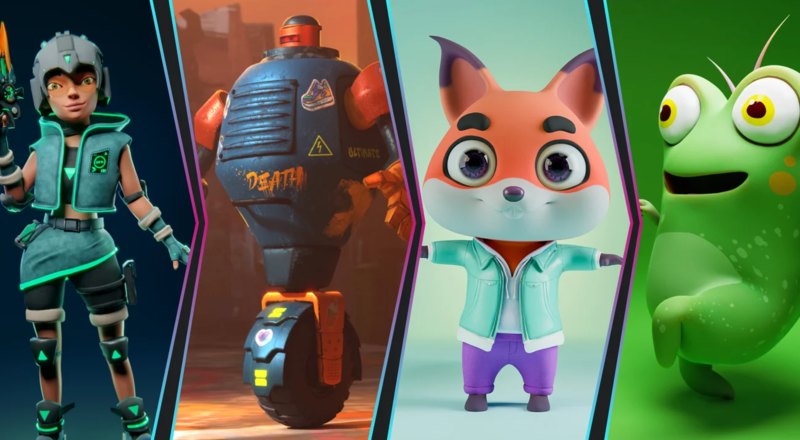
3D Animation Comparison: Top Software Tools for 20263D animation has quietly become the backbone of modern visual storytelling. Films, games, commercials, product demos, online education, and even corporate training now rely on digital characters and simulated environments to communicate ideas that traditional video cannot. Yet behind every polished animation lies a carefully constructed pipeline of tools, techniques, and production decisions. Understanding this ecosystem is essential for anyone entering or evolving within the animation field.- Top 5 New AI Assistant in 2026. Which one is Right for You?Not long ago, ChatGPT was the default AI assistant, with few serious competitors. But the landscape has changed fast. Today, AI assistants come in many forms: some focus on writing and research, others on workflow automation, meeting management, or multimodal content creation.
- Everything Else
The best AI chatbots in 2026You've probably tried at least one AI chatbot by now. Maybe ChatGPT helped you write an email. Perhaps Claude reviewed a document. Or Copilot drafted slides inside PowerPoint. But as more AI assistants flood the market, a new problem appears: which one should you actually rely on for real work?
- Unsold Electric Cars For Seniors Now Almost Given Away: View Prices
- Looking For Free Dental Implants? Check Out These Top Programs For Seniors
- Discover Affordable Senior Apartments Near You
- Empower Yourself With These HIV Treatment Choices
- Do You Know These Signs of Atopic Dermatitis
- How to Choose Reliable Dating Apps for Meaningful Connections