Not long ago, ChatGPT was the default AI assistant, with few serious competitors. But the landscape has changed fast. Today, AI assistants come in many forms: some focus on writing and research, others on workflow automation, meeting management, or multimodal content creation.

So is ChatGPT still the most practical option? Or have newer and more specialized assistants become better choices for specific work styles? In this guide, we compare five standout AI assistants head-to-head to see which ones deliver the best real-world performance in 2026.
Big Tech
ChatGPT (OpenAI)-The pioneer that brought conversational AI to the mainstream. It remains the most widely used assistant, offering the broadest range of capabilities from writing and coding to everyday problem-solving.
Gemini (Google)-Google's in-house AI assistant designed to live inside its ecosystem. It combines text, voice, and visual understanding, making it especially effective for users who rely on Google apps and services.
Copilot (Microsoft)-A productivity enhancer built directly into Windows and Microsoft 365. It helps users draft documents, manage emails, and summarize meetings without leaving familiar Office tools.
Meta AI (Meta)-An AI companion embedded across Meta's social platforms. It focuses on lightweight, conversational help inside apps like WhatsApp, Instagram, and Messenger.
Startups & Newcomers
Claude (Anthropic)-A thoughtful AI assistant optimized for deep context and long-form interaction. Popular among writers, researchers, and professionals handling complex text.
Grok (xAI)-An assistant with attitude, integrated into X. It delivers real-time social insights and direct, opinionated responses shaped by live platform data.
Perplexity-A research-first assistant that behaves more like an intelligent search engine, delivering answers backed by real-time web sources and citations.
DeepSeek (China)-A rapidly emerging model built for strong logical reasoning and mathematical problem-solving, gaining attention for technical performance.
Le Chat (Mistral, France)-A European-built assistant emphasizing open models and transparency, offering an alternative to closed Big Tech AI ecosystems.
Startups & Emerging AI Assistants to Watch
While Big Tech companies dominate mainstream adoption, a new wave of emerging AI assistants is quickly gaining traction. These tools are increasingly featured on AI discovery websites, tech newsletters, and productivity forums as the next generation of specialized assistants. Rather than trying to be everything at once, they focus on distinct strengths — from deep reasoning to real-time social awareness — offering fresh alternatives to established giants.
| Assistant | Positioning | Core Strength |
|---|---|---|
| Meta AI (Meta) | Social-embedded AI assistant | Casual yet powerful assistance inside WhatsApp, Instagram, and Messenger |
| Claude (Anthropic) | High-context writing & research assistant | Long-document handling, structured reasoning, deep content generation |
| Grok (xAI) | Real-time social intelligence assistant | Trend analysis, cultural context, opinionated responses using live X data |
| DeepSeek (China) | Technical reasoning-focused assistant | Strong math, logic, and coding performance |
| Le Chat (Mistral, France) | Open and transparent AI assistant | Open-weight models, privacy-friendly, European-built ecosystem |
Why These New Tools Matter
AI assistant websites and industry trackers now feature these emerging platforms prominently because they reflect the next shift in the market: from general chatbots to specialized, purpose-built assistants. Instead of competing only on raw intelligence, these tools differentiate through personality, transparency, real-time data access, or deep reasoning focus.
For users exploring AI tool discovery platforms, these newcomers are becoming essential names to watch in 2026.
Meta AI (Meta)

Best for
Everyday users who spend most of their time on social platforms and want quick, lightweight AI assistance inside familiar apps.
Why we picked it
Meta AI brings artificial intelligence directly into the world's most-used social environments. Instead of asking users to download a separate AI app, it embeds assistance inside WhatsApp, Instagram, Messenger, and Facebook. This makes AI help instantly accessible to billions of users, lowering the barrier to everyday adoption more than any other assistant.
Key features
-
Built directly into WhatsApp, Instagram, Messenger, and Facebook
-
Quick answers and conversational assistance inside chats
-
Content suggestions for captions, replies, and posts
-
Voice-based and image-based interaction on mobile
-
No separate account or setup required
Pros and cons
-
✅Zero learning curve — works inside apps people already use
-
✅Massive daily reach and instant accessibility
-
✅Useful for casual questions, writing short messages, and social content ideas
-
❌Primarily designed for casual interactions
-
❌Limited long-form writing or research features
-
❌Minimal workflow or productivity integrations
Pricing
Currently free to use inside Meta platforms.
Claude (Anthropic)

Best for
Writers, researchers, analysts, and professionals working with long, complex, or text-heavy material.
Why we picked it
Claude has established itself as the assistant of choice for deep thinking and long-form content. It handles large context windows smoothly, keeps conversations coherent over lengthy documents, and produces structured, calm, and well-reasoned writing. Many writing and research-focused AI tool directories now rank Claude as the leading assistant for serious content work.
Key features
-
Extremely large context window for long documents
-
High-quality summaries and structured explanations
-
Natural, calm writing tone suited for professional content
-
Strong reasoning and analytical task performance
-
Safety-first model design to reduce harmful outputs
Pros and cons
-
✅Excellent for long-document analysis and summarization
-
✅Produces well-organized and readable writing
-
✅Maintains context over extended conversations
-
❌Safety filters can make responses overly cautious
-
❌Fewer direct integrations with productivity apps
-
❌Less suitable for casual, quick-response chat use
Pricing
-
Free tier with usage limits
-
Pro plan typically around $20/month
-
Team and enterprise tiers available for higher volume use
Grok (xAI)

Best for
Users who want real-time trend awareness, social data insights, and a more opinionated conversational AI.
Why we picked it
Grok is the first mainstream assistant built directly around live social data. Integrated into X, it can analyze trending topics, public discussions, and breaking events as they happen. Its personality-driven responses make it feel less like a neutral tool and more like an informed social commentator — a unique position in the AI assistant landscape.
Key features
-
Fully integrated into the X platform
-
Access to real-time posts and trending discussions
-
Cultural and trend analysis capabilities
-
Direct, personality-rich conversational style
Pros and cons
-
✅Real-time access to live social information
-
✅Excellent for trend tracking and public sentiment checks
-
✅Distinctive conversational personality
Cons
-
❌Tone may feel too informal for professional use
-
❌Limited functionality outside X ecosystem
-
❌Not optimized for long-form or structured documents
Pricing
Included with X Premium subscription plans.
DeepSeek (China)

Best for
Developers, students, and technical professionals focused on math, logic, and coding-heavy problem solving.
Why we picked it
DeepSeek has rapidly gained attention in AI benchmark communities for strong reasoning efficiency and impressive mathematical performance. Unlike many assistants optimized for conversation, DeepSeek is built to solve technical and logic-driven tasks quickly and accurately, making it an emerging alternative for serious analytical workloads.
Key features
-
High-performance reasoning and math models
-
Strong coding and debugging capabilities
-
Fast response time with efficient inference
-
Publicly available models and APIs
Pros and cons
-
✅Excellent at logic, math, and programming tasks
-
✅Lightweight and fast model performance
-
✅Attractive for developers and technical users
Cons
-
❌Limited creative writing or conversational polish
-
❌Smaller ecosystem and fewer integrations
-
❌Less focus on visual or multimodal tasks
Pricing
-
Free public model access available
-
API pricing based on usage volume
Le Chat (Mistral, France)

Best for
Users who value transparency, open-weight AI models, and privacy-friendly alternatives to Big Tech assistants.
Why we picked it
Le Chat represents Europe's emerging AI ecosystem. Built on Mistral's open-weight models, it prioritizes transparency, user control, and data privacy. As AI governance and data concerns grow globally, Le Chat is increasingly featured in open-source and privacy-focused AI tool platforms.
Key features
-
Powered by open-weight Mistral models
-
Transparent model design and deployment
-
Privacy-oriented approach to data handling
-
Lightweight and responsive chat performance
Pros and cons
-
✅Open and transparent model philosophy
-
✅Strong privacy and data control focus
-
✅European-built alternative to closed ecosystems
Cons
-
❌Smaller feature set than major competitors
-
❌Limited integrations with mainstream apps
-
❌Enterprise features still maturing
Pricing
-
Free access currently available
-
Premium and enterprise plans expected as platform grows
The Next Phase of AI Assistants
The AI assistant landscape in 2026 is no longer defined by a single"best chatbot." Instead, it is shaped by specialization. Some assistants live inside social platforms, others power office suites, some excel at deep reasoning, while new entrants focus on emotional intelligence or real-time public data. This diversity signals a shift from general-purpose chatbots to purpose-built digital companions.
For users, the key takeaway is simple: the right AI assistant is the one that fits your daily environment. If your world revolves around social apps, Meta AI feels native. If you write, research, or analyze for hours, Claude becomes indispensable. If you track live trends, Grok offers unmatched immediacy. If logic and coding matter most, DeepSeek delivers. And if you want a more human, reflective digital companion, Pi stands apart.
As AI tool discovery platforms continue highlighting new contenders each month, the market will only grow more competitive. The future belongs not to one assistant, but to an ecosystem of intelligent tools quietly handling different parts of our lives.
 Best AI Workflow Automation Software Reviewed in 2026
- ChatGPT vs. Gemini vs. Perplexity vs. Copilot vs. Claude – Who's the Smartest?
- 3D Animation Comparison: Top Software Tools for 2026
- The Best AI Video Generator 2026: An Updated Comparison of 8 Tools
- The best AI chatbots in 2026


- Everything Else
Best AI Workflow Automation Software Reviewed in 2026Workflow automation software used to mean simple rule-based task routing. In 2026, the landscape has changed. Modern AI workflow platforms now combine automation, data orchestration, system integration, and predictive assistance into unified operational engines.- Everything Else
ChatGPT vs. Gemini vs. Perplexity vs. Copilot vs. Claude – Who's the Smartest?Artificial intelligence chatbots have moved far beyond novelty tools. Today, they serve as writing partners, research aides, coding companions, and workplace assistants. Yet with so many options available, the real question is no longer "Which AI is the smartest?" but "Which AI fits the way you actually work?"- Everything Else
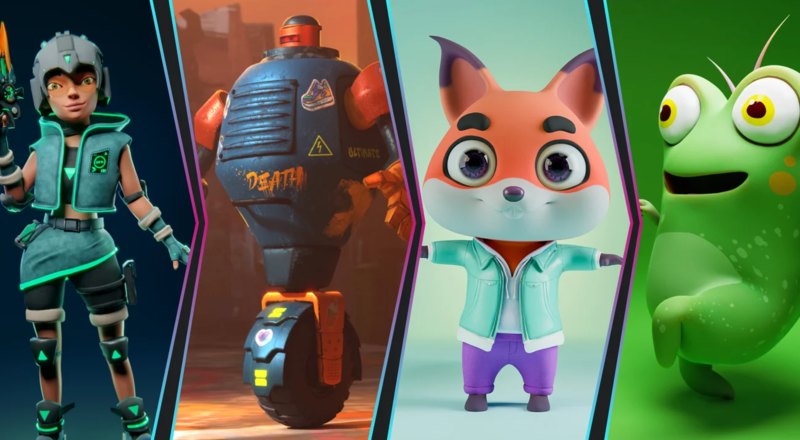
3D Animation Comparison: Top Software Tools for 20263D animation has quietly become the backbone of modern visual storytelling. Films, games, commercials, product demos, online education, and even corporate training now rely on digital characters and simulated environments to communicate ideas that traditional video cannot. Yet behind every polished animation lies a carefully constructed pipeline of tools, techniques, and production decisions. Understanding this ecosystem is essential for anyone entering or evolving within the animation field.- Everything Else
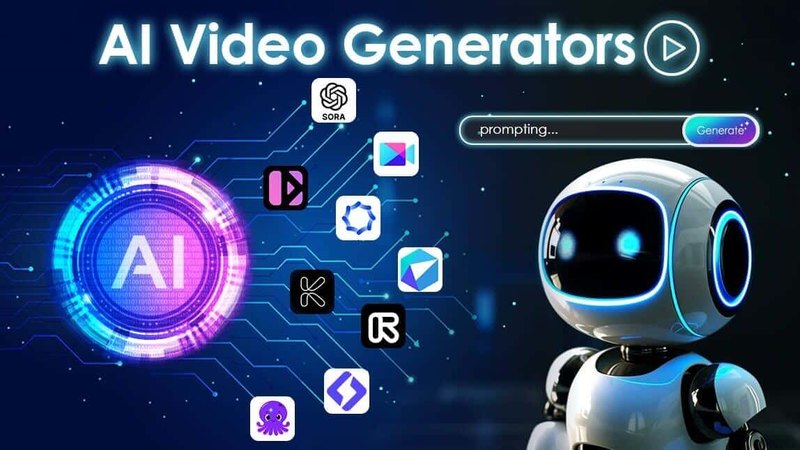
The Best AI Video Generator 2026: An Updated Comparison of 8 ToolsOnly two years ago, AI video tools were treated as experimental toys. Clips were short, unstable, and often unusable for real production. But model architectures, diffusion pipelines, and compute efficiency have advanced at remarkable speed. Today, AI video generators can produce multi-second cinematic shots with controlled camera movement, consistent environments, and increasingly realistic lighting.- Everything Else
The best AI chatbots in 2026You've probably tried at least one AI chatbot by now. Maybe ChatGPT helped you write an email. Perhaps Claude reviewed a document. Or Copilot drafted slides inside PowerPoint. But as more AI assistants flood the market, a new problem appears: which one should you actually rely on for real work?
- Unsold Electric Cars For Seniors Now Almost Given Away: View Prices
- Looking For Free Dental Implants? Check Out These Top Programs For Seniors
- Discover Affordable Senior Apartments Near You
- Empower Yourself With These HIV Treatment Choices
- Do You Know These Signs of Atopic Dermatitis
- How to Choose Reliable Dating Apps for Meaningful Connections