Have you ever wondered what it would be like to communicate instantly with technology that understands your tone, intent, and needs? AI virtual agents make that experience real. They help you interact effortlessly, get faster responses, and manage tasks intelligently, transforming how you connect with digital services every day.

What AI Virtual Agents Are and How They Operate
AI virtual agents are software systems designed to simulate human conversation through text or voice. They rely on natural language processing to interpret user messages and generate meaningful responses. Machine learning models help them adapt over time by analyzing interaction patterns and improving accuracy. Many systems incorporate contextual memory, enabling them to maintain coherent dialogues across multiple exchanges.
Key Communication Benefits of AI Virtual Agents
AI virtual agents deliver rapid responses that reduce waiting times and provide consistent interaction quality across every session. Their ability to operate around the clock ensures continuous availability, which is essential for global users in different time zones. These agents also scale effortlessly, handling thousands of simultaneous interactions without performance decline. For organizations, this level of efficiency lowers operational costs while maintaining reliable communication flows.
Practical Applications Across Industries
In customer service, AI virtual agents manage inquiries, track orders, and troubleshoot issues with minimal human intervention. Healthcare providers use them to offer appointment reminders, symptom screening, and basic guidance that supports patients before clinical visits. Financial institutions employ virtual agents to help customers monitor transactions, manage accounts, and understand loan options. Within education, AI agents deliver personalized study support, answer course-related questions, and provide feedback that helps learners stay on track.
How to Create Personal AI Virtual Agents
Creating a personal AI virtual agent begins with identifying your goal, such as managing messages, automating routine tasks, or supporting content creation. Once the objective is clear, you can select a development platform, ranging from no-code tools to advanced frameworks that allow full customization. Training the agent with your own data improves its relevance and ensures that it reflects your communication style. After deployment, continuous refinement is essential. By analyzing performance metrics, adjusting prompts, and updating datasets, you maintain the agent's reliability and accuracy over time.
Challenges That Influence Performance and Trust
While AI virtual agents offer significant value, they depend heavily on high-quality data. Poor or biased training data can lead to incorrect responses and reduced user confidence. Privacy remains another concern, as these systems often process sensitive information that requires strong safeguards. Ethical questions also emerge when users cannot easily distinguish between human and automated communication, making transparency an important design principle for trustworthy deployment.
Frequently Asked Questions (FAQ)
1. Are AI virtual agents the same as chatbots?
Not exactly. Chatbots often follow simple rule-based scripts, while AI virtual agents use advanced language models that understand context and generate more humanlike responses.
2. Can AI virtual agents learn from user interactions?
Yes. Many systems use machine learning to refine their responses based on historical data and usage patterns.
3. Do AI virtual agents store personal information?
This depends on the system's configuration. Secure platforms follow strict policies to protect sensitive data and minimize long-term storage.
4. How much technical skill is required to build a personal AI virtual agent?
Basic tools require almost no coding knowledge, while advanced platforms allow deeper customization for users with programming experience.
5. Can AI virtual agents replace human communication entirely?
No. They excel at handling routine tasks but still rely on humans for complex reasoning, emotional understanding, and nuanced decision-making.
Conclusion
AI virtual agents are reshaping how you communicate by offering faster responses, scalable interactions, and reliable support across various digital environments. As these systems evolve and become more accessible, they will continue to transform your daily interactions and strengthen the connection between humans and technology.
 Unlock the Full Potential of Your AI Assistant With These Smart Uses
- Learn Broadly About AI Automation and Its Impact on Work and Industry
- Learn More on AI Remote Management Tools for a Smarter Workday
- AI Virtual Agents Are Already Doing the Small Tasks You Never See
- How to Create Your Own 3D Character with AI Automation Tools



- Everything Else
Unlock the Full Potential of Your AI Assistant With These Smart UsesMany people still use AI virtual assistants as if they were little more than quick-answer tools for simple requests. In reality, modern assistants can do far more. This guide looks at what today's AI assistants are capable of, how to get better results from them, and the ways they are reshaping both everyday routines and professional work.- Everything Else
Learn Broadly About AI Automation and Its Impact on Work and IndustryAI automation is becoming one of the most important forces shaping modern business. It is changing how companies complete tasks, how employees spend their time, and how entire industries improve speed, accuracy, and decision-making. For anyone trying to understand the future of work, it is useful to learn broadly about AI automation and what this technology means in daily life.- Everything Else
Learn More on AI Remote Management Tools for a Smarter WorkdayRemote work can give people more freedom, but it can also create a surprising amount of digital stress. Messages arrive from every direction, meetings fill the calendar, notes get scattered across apps, and teams in different time zones may struggle to stay aligned. That is why many professionals now want to learn more on AI remote management tools and understand how these systems can make daily work easier.- Everything Else
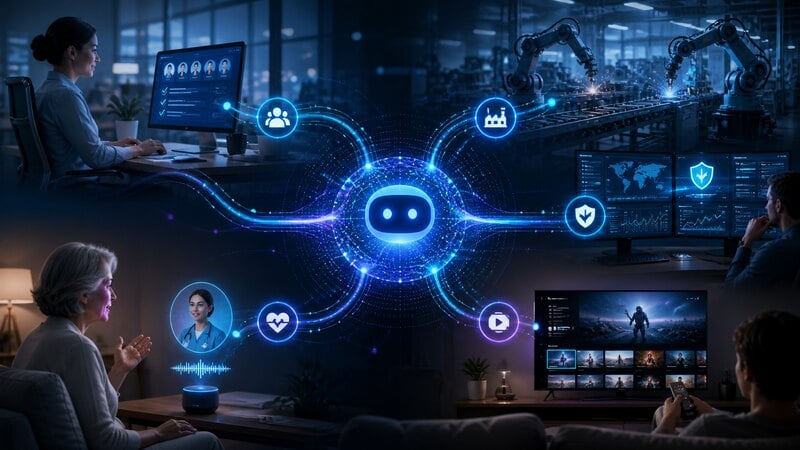
AI Virtual Agents Are Already Doing the Small Tasks You Never SeeFor years, most people imagined artificial intelligence as something they had to talk to. You asked a question. It answered. You typed a request. It replied. That picture is already out of date. A new kind of AI is moving quietly through business systems, healthcare platforms, security rooms, streaming apps, and factory floors. These systems do not simply respond with words. They complete tasks.- Everything Else
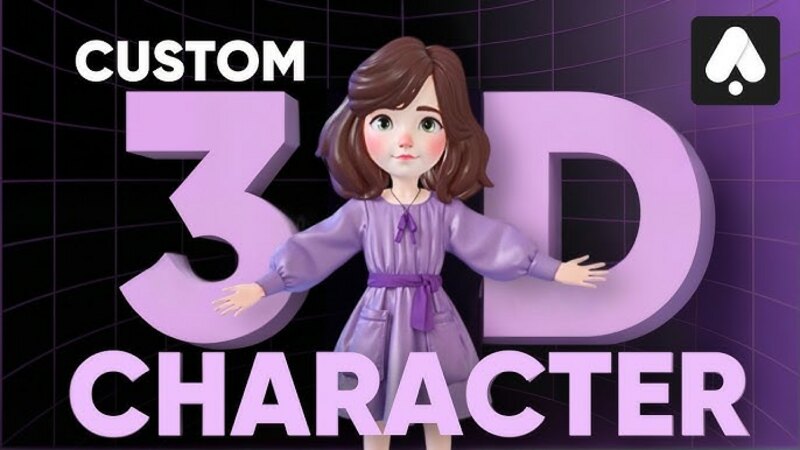
How to Create Your Own 3D Character with AI Automation ToolsWhen you want to design a custom 3D character without mastering complex modeling techniques, AI automation tools provide a fast, intuitive, and efficient workflow. With intelligent algorithms and guided interfaces, you can produce characters ready for animation, games, VR, or digital storytelling.
- Unsold Electric Cars For Seniors Now Almost Given Away: View Prices
- Looking For Free Dental Implants? Check Out These Top Programs For Seniors
- Discover Affordable Senior Apartments Near You
- Empower Yourself With These HIV Treatment Choices
- Do You Know These Signs of Atopic Dermatitis
- How to Choose Reliable Dating Apps for Meaningful Connections