Remote work can give people more freedom, but it can also create a surprising amount of digital stress. Messages arrive from every direction, meetings fill the calendar, notes get scattered across apps, and teams in different time zones may struggle to stay aligned. That is why many professionals now want to learn more on AI remote management tools and understand how these systems can make daily work easier.

AI remote management tools are software platforms that use artificial intelligence to handle routine work, organize information, summarize communication, and support better teamwork. Instead of forcing people to manage every small detail manually, these tools can quietly reduce friction in the background.
The goal is not to replace people or remove real collaboration. The goal is to make remote work feel less overwhelming. When used well, AI tools can help teams save time, protect focus, improve follow-up, and make decisions with clearer information.
This guide explains what AI remote management tools do, which problems they solve, the main types of platforms available, examples of popular tools, and how to choose software that actually makes your workday lighter.
Why AI Remote Management Tools Are Becoming More Important
Remote and hybrid work have become normal for many teams. People may work from home, shared offices, different cities, or even different countries. This flexibility is valuable, but it also creates new challenges that traditional office systems were not designed to handle.
In a remote team, a simple task can quickly become complicated. One person sends a message in Slack, another adds notes in a document, a manager updates a task board, and someone else discusses the same topic during a video call. If those pieces are not connected, important information can disappear.
This is where remote team management AI becomes useful. These tools help organize scattered information, identify priorities, summarize conversations, and keep people updated without making everyone chase details manually.
The best remote work software does not add more noise. It reduces noise. It helps people understand what matters, what needs action, and where to find the right information.
For managers, AI can make it easier to track progress without constantly interrupting the team. For employees, it can reduce the mental load of checking every message, remembering every follow-up, and searching through several apps to find one file.
Common Remote Work Problems AI Can Help Solve
Before choosing any software, it helps to look at the actual problems remote workers face every day. Many teams do not need more apps. They need fewer interruptions, clearer communication, and better organization.
One common problem is meeting overload. Remote teams often use meetings to replace casual office conversations, but too many calls can drain energy and reduce deep work time. AI transcription and meeting summary tools can capture important points, action items, and decisions so people do not need to attend every discussion just to stay informed.
Another problem is scattered knowledge. Important details may live in chat threads, old documents, project boards, email chains, and meeting recordings. AI knowledge management tools can search across information and help users find answers faster.
Calendar pressure is also a major issue. Remote workers often deal with back-to-back meetings, time zone gaps, and shifting priorities. AI scheduling tools can protect focus time, move tasks automatically, and suggest better meeting times.
| Remote Work Challenge | How AI Can Help | Benefit for the User |
|---|---|---|
| Too many meetings | Creates summaries, notes, and action items | Less time spent in unnecessary calls |
| Scattered information | Searches documents, chats, and notes quickly | Faster access to important details |
| Calendar overload | Adjusts tasks and meetings based on priority | More protected focus time |
| Unclear responsibilities | Highlights tasks, owners, and deadlines | Better team alignment |
| Missed updates | Summarizes unread chats and project changes | People stay informed with less effort |
Good AI productivity tools for remote work should make daily tasks feel lighter. If a platform requires constant setup, endless manual updates, or complicated training, it may create more work instead of solving the real problem.
Main Types of AI Tools for Remote Work
The world of AI remote management tools is broad, so it helps to divide them into categories. Once you understand the main types, it becomes easier to decide which tool fits your workflow.
AI project management tools help teams organize tasks, track deadlines, assign responsibilities, and understand progress. They can summarize project comments, suggest priorities, and automate routine updates.
AI scheduling tools for remote teams focus on calendars and time management. They can find open meeting slots, move tasks when priorities change, and protect deep work blocks.
AI transcription tools record and summarize video calls. They are useful for teams that spend a lot of time in meetings and need clear records of decisions, questions, and next steps.
AI communication tools for remote work help organize messages. They may summarize long chat threads, translate communication, suggest replies, or highlight urgent updates.
AI knowledge management tools help teams store, search, and organize internal information. They are useful for company policies, project notes, onboarding materials, research, and documentation.
AI collaboration tools for remote teams bring several of these functions together. They help people share ideas, track decisions, and stay connected across different locations.
-
Project management platforms help teams organize tasks and deadlines.
-
Scheduling assistants help protect time and reduce calendar conflicts.
-
Meeting transcription tools capture discussions and action items.
-
Communication platforms organize messages and missed updates.
-
Knowledge hubs make internal information easier to search and reuse.
Not every team needs every category. A small team may only need meeting summaries and smarter scheduling. A larger organization may need project tracking, knowledge management, communication support, and workflow automation.
Popular AI Remote Management Tools and What They Do
When people search for the best AI tools for remote teams, several well-known names often appear. Each tool solves a different type of problem, so it is helpful to compare them by use case instead of choosing based on popularity alone.
| Tool | Main Purpose | Useful Feature | Good Fit For |
|---|---|---|---|
| Motion | AI scheduling | Automatically adjusts daily tasks | Busy professionals and small teams |
| Reclaim AI | Calendar management | Protects focus time and balances meetings | People with packed calendars |
| ClickUp | Project management | Summarizes updates and supports automation | Growing teams and project-heavy workflows |
| Asana | Task tracking | Helps organize team work and status updates | Teams managing multiple projects |
| Notion AI | Knowledge management | Edits, summarizes, and organizes notes | Content teams, planners, and documentation-heavy teams |
| Otter.ai | Meeting transcription | Captures live meeting notes | Teams with frequent calls |
| Fireflies.ai | Call recording and summaries | Creates meeting highlights and action items | Sales, support, and remote collaboration teams |
| Slack | Team communication | Summarizes missed conversations | Fast-moving teams with many chat threads |
| Microsoft Teams | Communication and meetings | Supports meeting recaps and collaboration | Organizations already using Microsoft tools |
Motion and Reclaim AI are helpful for people who struggle with overloaded calendars. These tools can adjust the day automatically when priorities shift, helping users avoid constant manual planning.
ClickUp and Asana are stronger for project visibility. They help teams see what is moving, what is blocked, and who is responsible for each task. Their AI features can reduce the time spent reading long comment threads or updating routine statuses.
Otter.ai and Fireflies.ai are useful for meeting-heavy teams. They allow people to focus on the conversation instead of typing notes the entire time. After the call, the team can review summaries, decisions, and follow-up tasks.
Notion AI is useful for organizing knowledge. It can help rewrite notes, summarize documents, draft outlines, and turn scattered ideas into cleaner pages. Slack and Microsoft Teams support communication by helping users catch up on conversations they missed.
How to Choose AI Tools Without Creating More Overwhelm
Choosing AI tools for remote work can feel confusing because every platform claims to save time. The key is to start with the problem, not the tool. A good tool should solve a real frustration in your workflow.
Start by asking what slows you down the most. Is it too many meetings? Too many unread messages? Poor task tracking? Missing documents? Calendar pressure? Once the problem is clear, it becomes easier to choose a tool that fits.
You should also check how well the tool connects with your current software. A scheduling assistant that does not work with your calendar may create more trouble. A project management tool that does not fit your team's habits may be ignored after the first week.
The best tool should have a simple learning curve. Remote teams already manage enough digital systems. If people need days of training just to understand basic features, adoption may be difficult.
-
Identify the biggest daily pain point before comparing platforms.
-
Choose tools that connect with your existing workflow instead of forcing a full reset.
-
Look for simple setup and clear daily value.
-
Avoid tools that require constant manual maintenance.
-
Test one tool at a time before building a large software stack.
-
Measure whether the tool saves time after the first few weeks.
When you learn more on AI remote management tools, focus on practical value. A tool does not need to be impressive in a demo if it does not help your team work better every day.
Best Practices for Using AI in Remote Teams
AI tools work best when teams use them with clear expectations. Adding software without a plan can create confusion. People may not know where to find notes, which tasks are updated automatically, or which tool should be trusted as the main source of information.
Start small. Instead of introducing five platforms at once, choose one or two tools that solve the most urgent problems. For example, a team struggling with meeting follow-up may begin with a transcription tool. A team losing time to calendar conflicts may start with an AI scheduling assistant.
Set simple rules for how the tool should be used. Decide where meeting notes will live, who reviews AI-generated summaries, how action items are confirmed, and how often automated workflows should be checked.
It is also important to keep humans involved. AI can summarize a meeting, but it cannot fully understand team morale, personal stress, or sensitive workplace situations. Managers still need real conversations with their teams.
-
Introduce tools gradually so people can adapt.
-
Create clear rules for notes, tasks, and updates.
-
Review automated workflows regularly to make sure they still help.
-
Keep human check-ins as part of remote management.
-
Use AI as support, not as a replacement for leadership or communication.
AI communication tools for remote work can make collaboration smoother, but they should not remove empathy from the workplace. The best remote teams use AI to handle repetitive details while people focus on trust, creativity, and problem-solving.
Building a Calmer and More Productive Remote Workflow
The right AI remote management tools can change the way a remote team feels. Instead of chasing messages, searching for files, and losing track of decisions, people can work with more clarity.
A calmer remote workflow usually comes from a small set of well-chosen tools. One tool may protect the calendar. Another may summarize meetings. Another may organize company knowledge. Together, they create a system that reduces mental load rather than adding more complexity.
The most important thing is to avoid chasing every new trend. A tool should earn its place in your workflow by saving time, improving focus, or reducing confusion. If it does not do one of those things, it may not be necessary.
For individuals, AI productivity tools for remote work can help plan the day, summarize information, and make deep work easier. For teams, they can improve visibility, reduce missed updates, and make collaboration smoother across time zones.
Used thoughtfully, AI remote management tools can help people feel more in control of their workday. They can reduce repetitive computer chores and give teams more time for meaningful work.
Conclusion
To learn more on AI remote management tools is to understand how artificial intelligence can support better remote work without making life more complicated. These tools can help with scheduling, project tracking, meeting notes, communication, knowledge management, and workflow automation.
The best AI tools for remote teams are not always the most advanced or expensive. They are the tools that solve real problems, fit naturally into existing habits, and help people spend less time on busywork.
Start with one clear challenge. Choose a tool that addresses that problem directly. Test it with your real workflow. Keep it only if it saves time, lowers stress, and helps your team work with more confidence.
Remote work should feel flexible, focused, and manageable. With the right AI remote management tools, teams can reduce digital clutter, improve communication, and build a more peaceful and productive workday.
 The Everyday Benefits of Using an AI Assistant like Muse AI
- The Everyday Benefits of Using an AI Assistant like Muse AI
- Unlock the Full Potential of Your AI Assistant With These Smart Uses
- Learn Broadly About AI Automation and Its Impact on Work and Industry
- AI Virtual Agents Are Already Doing the Small Tasks You Never See




- Everything Else
The Everyday Benefits of Using an AI Assistant like Muse AI- Everything Else
The Everyday Benefits of Using an AI Assistant like Muse AIAI is becoming part of everyday life, but you do not need to be a technology expert to benefit from it. Modern AI tools can help with surprisingly ordinary things, from writing a quick message and organizing your day to learning something new or coming up with dinner ideas.- Everything Else
Unlock the Full Potential of Your AI Assistant With These Smart UsesMany people still use AI virtual assistants as if they were little more than quick-answer tools for simple requests. In reality, modern assistants can do far more. This guide looks at what today's AI assistants are capable of, how to get better results from them, and the ways they are reshaping both everyday routines and professional work.- Everything Else
Learn Broadly About AI Automation and Its Impact on Work and IndustryAI automation is becoming one of the most important forces shaping modern business. It is changing how companies complete tasks, how employees spend their time, and how entire industries improve speed, accuracy, and decision-making. For anyone trying to understand the future of work, it is useful to learn broadly about AI automation and what this technology means in daily life.- Everything Else
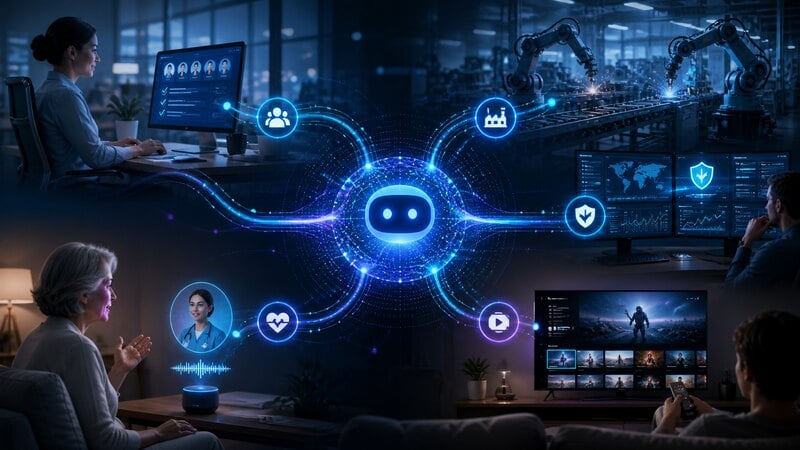
AI Virtual Agents Are Already Doing the Small Tasks You Never SeeFor years, most people imagined artificial intelligence as something they had to talk to. You asked a question. It answered. You typed a request. It replied. That picture is already out of date. A new kind of AI is moving quietly through business systems, healthcare platforms, security rooms, streaming apps, and factory floors. These systems do not simply respond with words. They complete tasks.
- Unsold Electric Cars For Seniors Now Almost Given Away: View Prices
- Looking For Free Dental Implants? Check Out These Top Programs For Seniors
- Discover Affordable Senior Apartments Near You
- Empower Yourself With These HIV Treatment Choices
- Do You Know These Signs of Atopic Dermatitis
- How to Choose Reliable Dating Apps for Meaningful Connections