As a design enthusiast, you can see how digital software has revolutionized the art of shaping cars. Modern vehicle design no longer starts with clay or paper; it begins with intelligent computer programs that blend artistic creativity and engineering precision. This fusion of art and technology defines the new era of automotive construction, where design excellence and smart software evolve hand in hand.

1. The Digital Shift in Car Design
The transformation of car design from manual sketching to computer-based modeling has fundamentally changed how vehicles are created. For most of the 20th century, automotive design was a tactile craft involving pencils, tracing paper, and clay models. Designers relied on physical craftsmanship and visual intuition to sculpt shapes by hand.
Today, those same principles are still present but are guided by digital tools. Computer-Aided Design (CAD) software allows designers to model vehicles with mathematical precision. Every millimeter can be controlled, measured, and visualized in three dimensions. Unlike traditional methods, digital models are easy to modify—proportions can be adjusted in minutes instead of days. This efficiency enables a faster, more dynamic design process where innovation never stops.
The move to software also means global teams can collaborate in real time. A designer in Munich can sculpt a digital car body that an engineer in Tokyo tests simultaneously for aerodynamic efficiency. This integration has redefined automotive design from an isolated creative task into a collaborative, global engineering effort.
2. The Tools That Define Modern Automotive Design
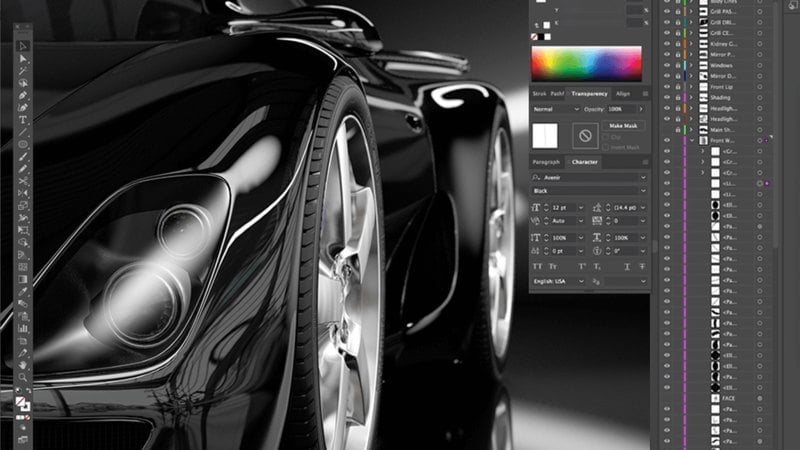
Today's car design studios are dominated by sophisticated 3D and CAD tools. Programs such as Autodesk Alias, CATIA, Siemens NX, and Blender have become the industry standard for exterior design.
Each tool serves a specific role in the process. Autodesk Alias specializes in surface modeling, allowing designers to craft the fine curvature and reflections that define a car's visual character. CATIA integrates design and engineering, ensuring that aesthetic beauty aligns with structural feasibility. Siemens NX provides real-time simulation and precision for industrial integration, while Blender—though open-source—is becoming increasingly popular for early concept visualization and rendering.
These platforms work together as part of a seamless digital ecosystem. Designers can move from sketching and surface modeling to virtual testing and photorealistic rendering without ever creating a physical prototype. The results are cars that are not only beautiful but also optimized for performance and production efficiency.
3. Step-by-Step: Designing a Car Exterior Using 3D Software
Creating a vehicle's exterior through software involves a structured digital workflow. Below is a practical, step-by-step process that mirrors how professional automotive designers bring a concept to life using software like Autodesk Alias or Blender.
Step 1: Concept Sketch Import
The process begins with a drawing. A hand sketch or digital illustration captures the initial design idea. This sketch is imported into the 3D software as a reference image. It provides the emotional and stylistic foundation for the model.
Step 2: Setting the Blueprint Planes
Blueprints—top, side, front, and rear views—are imported to create a proportional framework. These orthographic references ensure that all views align perfectly. Designers then scale the images to match the vehicle's intended dimensions, laying the foundation for accurate modeling.
Step 3: Building the Base Mesh
Using polygonal or NURBS modeling techniques, designers begin shaping the vehicle's body. They create large surfaces first, such as the hood, roof, and side panels, before refining smaller details. Symmetry tools help maintain balance across both sides of the car. The focus here is on capturing the essential form rather than fine detail.
Step 4: Refining Surface Details
Once the base shape is complete, designers add precision. Sharp edges, creases, door lines, and surface breaks are defined. Tools like reflection analysis help ensure that light flows smoothly across the body, avoiding unwanted distortions. The surface is continuously checked from different viewing angles for visual harmony.
Step 5: Aerodynamic Optimization
The digital model can now be tested for aerodynamic performance. Using integrated or external CFD (Computational Fluid Dynamics) tools, airflow is simulated around the car. Designers can visualize areas of high drag and modify the body accordingly. Adjustments to the roofline, rear diffuser, or mirror shapes can improve aerodynamic efficiency without sacrificing design aesthetics.
Step 6: Material and Lighting Visualization
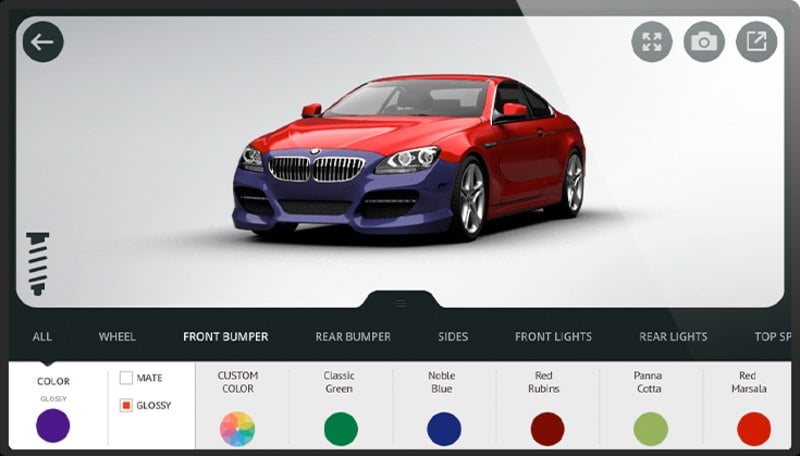
After shape optimization, designers apply materials such as metallic paints, chrome, and glass. Realistic lighting environments are set up using rendering engines like VRED, KeyShot, or Cycles. This allows the team to preview how the car will appear under daylight, sunset, or showroom conditions. The interplay of color, reflection, and light reveals how the design communicates emotion and identity.
Step 7: Presentation and Review
The final digital model is rendered for presentation. High-resolution images, animations, or VR walkthroughs are generated. Using virtual reality headsets, designers and executives can walk around the digital vehicle at full scale, evaluate proportions, and make final decisions. Adjustments can be made instantly—something impossible in the traditional design era.
Through this digital workflow, the process of designing a car's exterior becomes faster, more collaborative, and infinitely more precise.
4. Integrating Aerodynamics and Functionality
A car's beauty is meaningless without functionality. Software ensures that aesthetic choices complement engineering performance. Using digital aerodynamic analysis, designers can predict airflow behavior before any physical testing.
In the past, wind-tunnel testing required building expensive clay models. Now, CFD simulations allow designers to refine shapes digitally, reducing physical testing costs and development time. Every curve—from the front bumper to the rear spoiler—is tested for its impact on stability, cooling, and energy efficiency.
This integration of aerodynamics and design allows engineers and artists to work hand in hand. Instead of choosing between beauty and performance, both goals are achieved simultaneously. The digital design model thus becomes not just a visual representation but a performance-validated structure ready for manufacturing.
5. VR and AR in Modern Exterior Design
Virtual Reality (VR) and Augmented Reality (AR) have taken digital design even further. Designers can now step into immersive 3D environments and experience the vehicle as if it were physically present. With VR headsets, proportions, reflections, and lines can be evaluated in real-world scale and lighting conditions.
Augmented Reality adds another dimension by overlaying digital designs onto physical spaces. A designer can project a new car exterior onto an existing chassis or even view it parked virtually in a showroom environment. This technology allows immediate visual feedback and helps teams make informed aesthetic and engineering decisions.
Furthermore, VR and AR facilitate global collaboration. Teams in different countries can interact with the same 3D model simultaneously, discussing changes and testing variations in real time. This interconnected workflow accelerates decision-making and shortens development cycles while maintaining design consistency across global studios.
6. The Future of Software-Driven Exterior Design
As artificial intelligence becomes more advanced, design software is evolving into a creative partner rather than just a tool. AI-assisted systems can now generate alternative body shapes based on aerodynamic data, weight distribution, and aesthetic parameters defined by the designer.
Generative design algorithms analyze thousands of variations to suggest optimal solutions. Instead of manually adjusting each curve, designers guide the AI's output, blending machine precision with human taste. This approach opens the door to entirely new forms of automotive expression—cars that look unique yet are shaped by logic and performance.
In the future, cars will be "software-defined" not only in their internal systems but also in their physical forms. The process of exterior design will continue to merge creativity and computation until digital imagination becomes indistinguishable from real-world craftsmanship.
FAQs
1. What software do professionals use for car exterior design?
Most professional studios use Autodesk Alias, CATIA, and Siemens NX for surface modeling and integration. Blender and Maya are often used for visualization and concept design.
2. Can beginners learn digital vehicle modeling easily?
Yes. Many free tutorials and open-source tools like Blender make it accessible. However, mastering curvature control, reflection balance, and surface precision takes time and practice.
3. How is aerodynamics tested through software simulations?
Designers use CFD tools to simulate airflow digitally. These simulations visualize drag and turbulence, allowing adjustments before any prototype is built.
4. What role does VR play in exterior car design?
VR enables designers to view and evaluate their models at life-size scale. It helps test proportions, lighting, and emotional impact long before production begins.
5. Will AI eventually design entire car exteriors autonomously?
AI can assist by generating and optimizing shapes, but human creativity remains essential. The designer's emotional judgment and brand understanding cannot be fully replaced by algorithms.
Conclusion
Smart cars truly begin with smart software. The era of hand-sculpted vehicles has evolved into a digital art form where creativity meets computation. Through CAD systems, digital sculpting, aerodynamic simulation, and immersive VR visualization, designers now have unprecedented power to imagine and refine every surface. This transformation allows you—as a designer, engineer, or enthusiast—to participate in an age where imagination is no longer limited by physical tools. The cars of the future will not just be built smarter; they will be designed smarter—from the first digital line to the final, aerodynamic curve.
 Les voitures intelligentes commencent avec des logiciels intelligents : Innovations dans la construction de véhicules
- Smarte Autos beginnen mit smarter Software: Innovationen im Fahrzeugbau
- Smart Cars Begin with Smart Software: Innovations in Vehicle Construction
- Una guía paso a paso para el diseño de coches en 3D utilizando software de construcción en línea
- Un guide étape par étape pour la conception de voitures 3D à l'aide de logiciels de construction en ligne
- Automotive
Les voitures intelligentes commencent avec des logiciels intelligents : Innovations dans la construction de véhiculesVous vivez à une époque où l'avenir de la mobilité ne dépend pas seulement des moteurs et des roues, mais aussi de la puissance des logiciels avancés. En explorant comment les logiciels de construction transforment la conception automobile, vous obtenez un aperçu de la façon dont la technologie conduit à des véhicules plus sûrs, plus efficaces et plus durables.- Automotive
Smarte Autos beginnen mit smarter Software: Innovationen im FahrzeugbauSie leben in einem Zeitalter, in dem die Zukunft der Mobilität nicht nur von Motoren und Rädern, sondern auch von der Leistungsfähigkeit fortschrittlicher Software abhängt. Indem Sie erforschen, wie Konstruktionssoftware das Automobildesign verändert, erhalten Sie Einblicke, wie Technologie sicherere, effizientere und nachhaltigere Fahrzeuge vorantreibt.- Automotive
Smart Cars Begin with Smart Software: Innovations in Vehicle ConstructionYou are living in an age where the future of mobility depends not only on engines and wheels but also on the power of advanced software. By exploring how construction software transforms car design, you gain insight into how technology drives safer, more efficient, and more sustainable vehicles.- Automotive
Una guía paso a paso para el diseño de coches en 3D utilizando software de construcción en líneaAhora puede completar el diseño de coches en 3D directamente en su smartphone utilizando software avanzado de diseño de coches en 3D. Con software de construcción en línea y plataformas de diseño de software de construcción 3D, puede modelar exteriores de vehículos, refinar superficies y exportar diseños realistas para presentación o producción, todo desde un dispositivo móvil.- Automotive
Un guide étape par étape pour la conception de voitures 3D à l'aide de logiciels de construction en ligneVous pouvez désormais réaliser la conception de voitures en 3D directement sur votre smartphone à l'aide d'un logiciel de conception de voitures 3D avancé. Avec les logiciels de construction en ligne et les plateformes logicielles de conception 3D pour la construction, vous pouvez modéliser les extérieurs des véhicules, affiner les surfaces et exporter des conceptions réalistes pour la présentation ou la production, le tout depuis un appareil mobile.
- Unsold Electric Cars For Seniors Now Almost Given Away: View Prices
- Looking For Free Dental Implants? Check Out These Top Programs For Seniors
- Discover Affordable Senior Apartments Near You
- Empower Yourself With These HIV Treatment Choices
- Do You Know These Signs of Atopic Dermatitis
- How to Choose Reliable Dating Apps for Meaningful Connections